

The Connector Problem in Enterprise AI
Every serious enterprise AI deployment runs into the same problem eventually. The AI model is capable. The data it needs to do useful work exists somewhere in the organisation. But getting the model to reliably access and act on that data requires building custom integrations for every tool, every data source, and every action — work that is expensive, brittle, and has to be rebuilt every time something changes.
Model Context Protocol — MCP — was designed to solve this. And in 2026, it has become the foundational standard for how AI agents connect to enterprise systems, including Microsoft 365 and Claude-powered workflows.
What MCP Actually Is
MCP is an open protocol, originally developed by Anthropic and released to the open community in 2024, that provides a standardised way to expose functions, data, and controls from external systems into AI workflows. Think of it as a universal connector standard for AI agents — similar to how USB standardised physical device connections, or how REST APIs standardised web service communication.
Before MCP, if you wanted an AI agent to read from your SharePoint library, search your CRM, and write to your ticketing system, you needed three separate custom integrations, each built differently and maintained independently. With MCP, each of those systems exposes an MCP server — a standardised interface that any MCP-compatible AI client can connect to and use.
The result is that a Claude agent built today can, with the right MCP servers configured, interact with SharePoint, Teams, Dynamics 365, Salesforce, Jira, ServiceNow, or any other system that has published an MCP server — without requiring a custom integration for each one.
How MCP Works With Claude
Anthropic added MCP support to Claude in 2024 and has been expanding it significantly since. In January 2026, Anthropic extended MCP with a feature called MCP Apps — which allows MCP servers to supply interactive user interfaces that render directly inside Claude's chat interface. Users can now view, edit, and interact with content from connected services without leaving the Claude window.
In the Microsoft 365 + Claude context, MCP is the mechanism that connects a Claude agent to your enterprise data. When you build an agent in the Microsoft Agent Framework using Claude via Azure Foundry, you configure MCP connections as tools that the agent can invoke. The agent's reasoning — powered by Claude — decides when to call which tool, what parameters to pass, and how to use the results to complete the task.
Microsoft has published MCP servers for key services in the M365 ecosystem. The Microsoft Learn MCP server, for example, lets agents retrieve documentation. SharePoint MCP connections let agents search and retrieve documents from your tenant. As the ecosystem matures, MCP coverage across the M365 stack is expanding rapidly.
MCP Servers You Can Use Today
The MCP ecosystem in early 2026 includes servers across a wide range of categories. For Microsoft 365 specifically, relevant MCP connections include SharePoint document search and retrieval, Teams channel and message access, OneDrive file operations, and Dynamics 365 data access for CRM and ERP use cases.
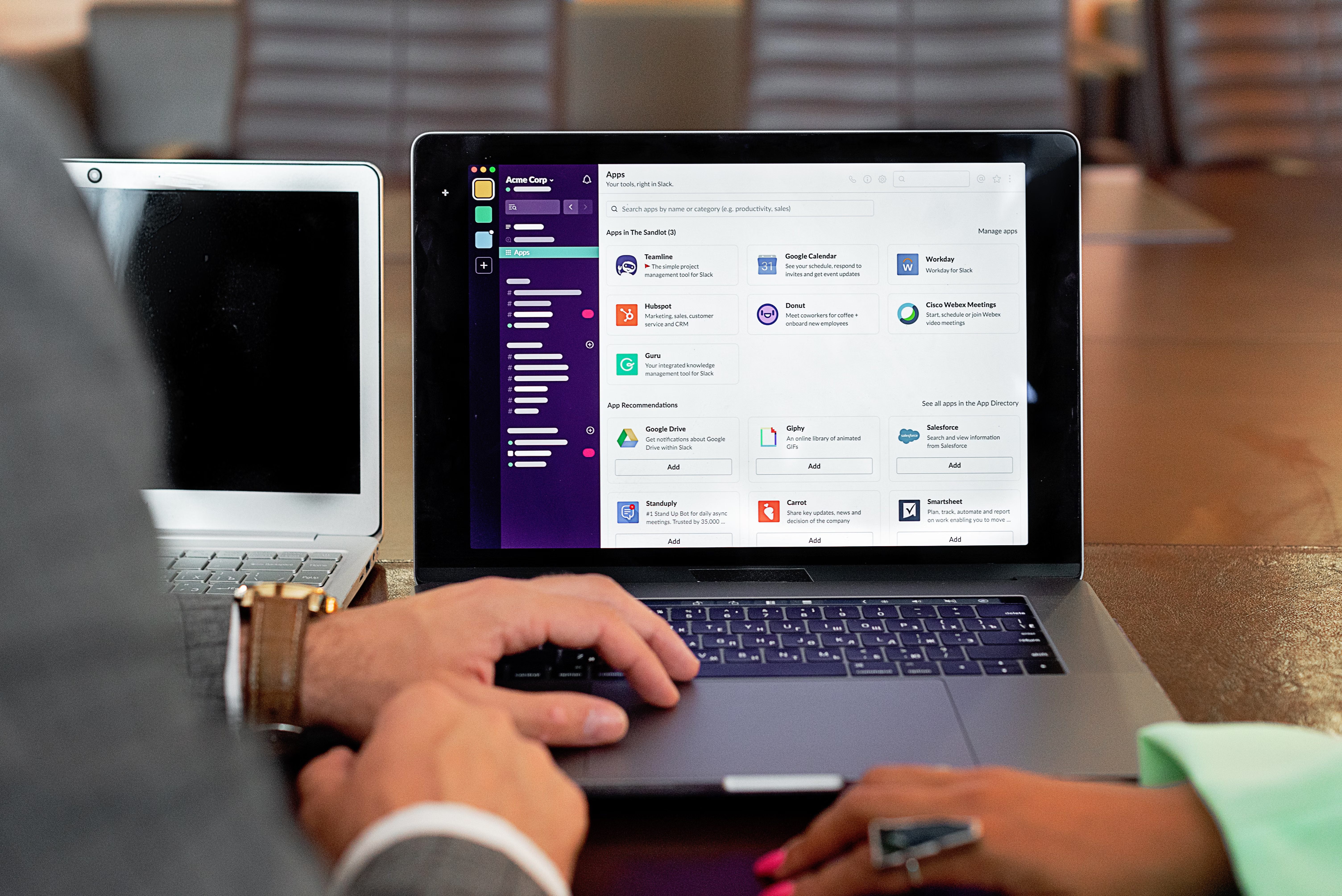
Beyond Microsoft's own services, the broader MCP ecosystem covers project management tools including Asana, Monday.com, and Jira; communication platforms including Slack and Teams; creative and productivity tools including Figma, Canva, and Box; and developer tools including GitHub and various CI/CD platforms. Anthropic released eleven open-source agentic plugins in January 2026 covering sales, legal, finance, marketing, data analysis, and software development workflows.
For enterprise use cases not covered by existing MCP servers, organisations can build custom MCP servers that expose internal databases, proprietary systems, or specialised tools. This is where the real power of the standard emerges — any system can be made agent-accessible through a custom MCP server, using the same interface standard that connects the agent to everything else.
Security Considerations for MCP in Enterprise Deployments
MCP adoption at enterprise scale requires careful attention to access control and security architecture. MCP servers expose real actions and real data to AI agents, which means the permission model for what each agent can access and do needs to be deliberately designed.
The core principle is least-privilege access — agents should be configured with MCP connections that give them access only to the data and actions they need for their specific function. A document summarisation agent does not need write access to your SharePoint library. An onboarding agent does not need access to financial records.
Security researchers have identified prompt injection as a relevant attack vector for MCP-connected agents — where hidden instructions embedded in documents or external content attempt to redirect the agent's behaviour. Mitigations include input validation, sandboxed execution environments, and careful review of what external content agents are permitted to process.
When Claude agents run through Azure Foundry, Microsoft's enterprise security infrastructure provides an additional governance layer: audit logging of all agent actions, integration with Microsoft Entra for identity management, and compliance controls that apply to agent activity in the same way they apply to human activity.
Why MCP Matters More Than Any Individual Integration
The strategic significance of MCP is that it shifts the network effect in enterprise AI. Every new MCP server that gets published makes every MCP-compatible agent more capable, without requiring any changes to the agent itself. The ecosystem compounds over time in a way that proprietary integration approaches cannot match.
For organisations building agent strategies in 2026, understanding MCP is as fundamental as understanding APIs was a decade ago. The organisations that build MCP fluency into their development teams now will have a significant architectural advantage as the ecosystem matures.
At Trim Journey, we design and build MCP-connected agent architectures for Microsoft 365 environments, including custom MCP server development for proprietary systems. Book a 30-minute call to discuss what MCP connectivity looks like for your specific workflows.